FAGUO x Losanje: when industrial upcycling enters the retail wardrobe
How a capsule collection of 4,500 upcycled pieces was integrated into a retail collection, meeting industrial, commercial, and stylistic standards.
your
textile products with us?
Producing from existing materials rather than creating new ones: on paper, textile upcycling seems like an obvious environmental choice. In the industrial reality of fashion, however, the equation is more complex.
Volumes, seasonal calendars, quality standards, retail prices, stylistic consistency: few circular initiatives are able to overcome all of these constraints.
With the FAGUO x Losanje capsule collection, this assumption is put to the test.
- 4,500 upcycled items produced
- 3.5 tons of secondhand clothing repurposed
- Included in the Spring-Summer 2026 collection
- Distribution in stores and online
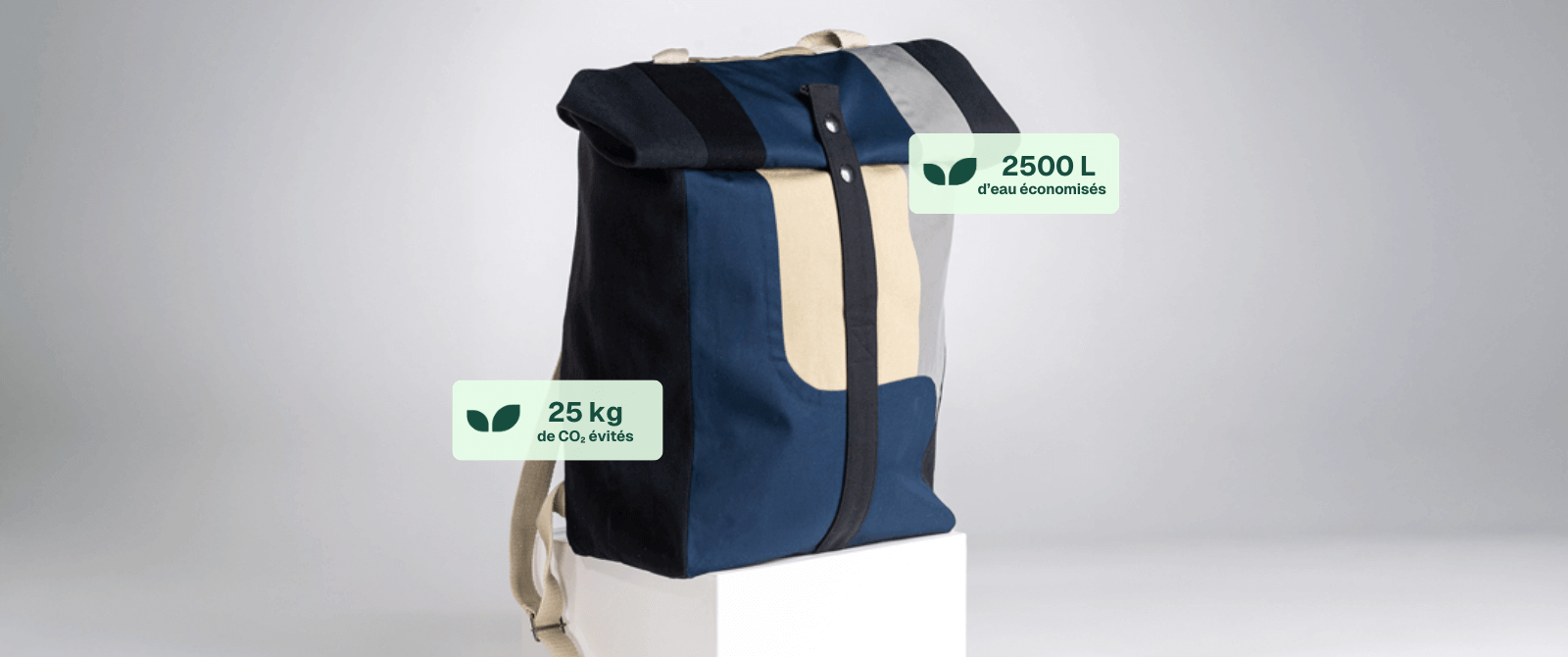
- Up to 90% less CO₂ emissions compared to conventional textile production
Beyond a collaboration, this project is a concrete example oflarge-scale industrial textile upcycling, and directly questions the evolution of the textile production model.
Upcycling in fashion: still a marginal practice
For a long time, textile upcycling remained confined to small-scale production by independent designers or niche brands. Often associated with one-of-a-kind items and lengthy, costly manual processes, it is frequently presented as virtuous, but rarely as a viable industrial model.
Several obstacles explain this perception:
- Industrial constraints: a retail brand must guarantee consistent MOQs, deadlines that are compatible with the collection schedule, reproducible quality standards, and controlled retail prices.
- Standardization requirements: The textile industry relies on consistent quality and repeatability in mass production. At first glance, the variability of post-consumer garments may appear difficult to reconcile with these standards.
- Stylistic consistency: in fashion, a product is not sold solely on the basis of its environmental impact. It must fit into an identifiable wardrobe and preserve the brand's codes.
In this context, upcycling is still widely perceived as difficult to industrialize on a large scale.
The FAGUO case: integrating upcycling into a low-carbon wardrobe
Since its creation, FAGUO has been developing a wardrobe designed to reduce its carbon footprint without compromising on style or product desirability. The brand is gradually structuring its decarbonization trajectory by exploring concrete levers that can be integrated into its existing retail model.
The ambition was twofold:
- Offer an upcycled collection that meets the same stylistic, quality, and commercial standards as a classic line.
- Significantly reduce environmental impact by producing exclusively from existing clothing
The result: more than 4,500 pieces added to the Spring-Summer 2026 collection, available in stores and online. For the first time, a capsule collection created through industrial upcycling has been fully integrated into the brand's retail wardrobe.
.jpg)
The industrial model: how upcycling becomes reproducible
The FAGUO x Losanje capsule was not developed as a small-scale experiment, but as a structured industrial project from start to finish.
Product co-development: considering industrialization from the design stage onwards
The work began upstream, between FAGUO's design teams and Losanje's design office, which specializes in industrial textile upcycling.
From the design phase onwards, the specifications included precise criteria to ensure consistency and reproducibility in series production:
- material composition thresholds
- specified weight ranges
- colorama framed
.jpg)
Material sourcing: transforming heterogeneity into a controlled flow
Samples were sent to partner sorting centers in Europe in order to select clothing that met the defined criteria.
This targeted sourcing work makes it possible to transform a post-consumer waste stream, which is heterogeneous by nature, into a qualified material flow.
Automated cutting: the key driver of industrialization
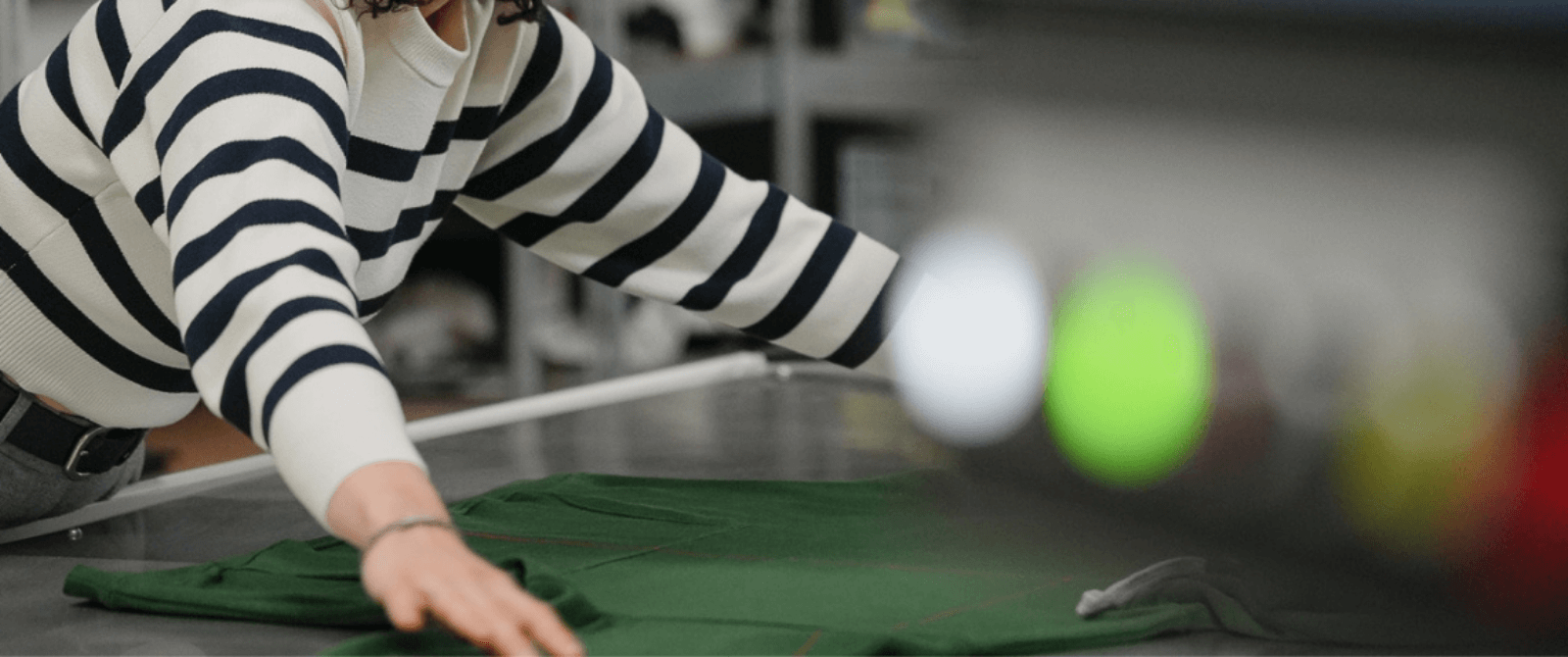
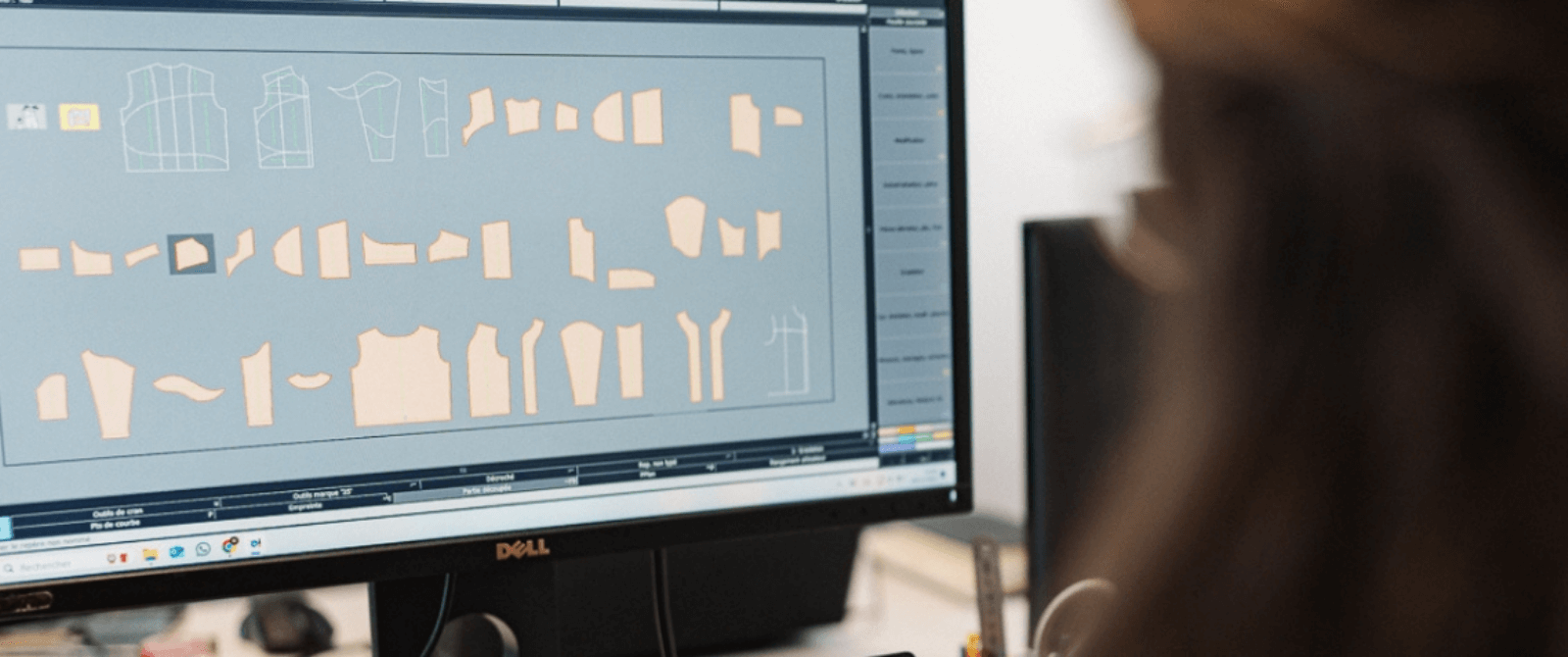
Once the material had been prepared, the garments were cut automatically at the Losanje factory.
This step is at the heart of the upcycling industrialization model:
- standardization of inserts
- format repeatability
- optimization of existing textile stocks
- reduction in material losses
Automation enables the transition from artisanal methods to structured textile production.
Assembly and haberdashery: ensuring product durability
Final assembly was entrusted to partner workshops in France.
New haberdashery has been incorporated to ensure the strength and durability of the pieces, while guaranteeing visual consistency.
.jpg)
Quality control: aligned with retail standards
Quality control is performed at each stage of the process to verify:
- material compliance
- resistance
- finishes
- color consistency
The pieces produced meet the requirements of a classic retail collection.
In total, more than 3.5 tons of secondhand clothing were repurposed for this capsule collection.
With this structured process, upcycling is integrated into an industrial textile production chain in the same way as conventional production, without generating additional virgin material.
Desirability, price, retail: the real test
In fashion, environmental impact alone is not enough to trigger a purchase.
Circular innovation can only succeed if it respects the fundamentals of retail: stylistic consistency, shelf visibility, price positioning, and customer experience.
Incorporating upcycling without disrupting your wardrobe
For this capsule collection, FAGUO has opted for a bold patchwork design, conceived not as a constraint but as a graphic signature. The reconstruction using existing materials becomes visible, assertive, and integrated into the design.
Two iconic best sellers, the LUGNY T-shirt and the DIRAC sweatshirt, have been reimagined in upcycled versions. The volumes, cuts, and visual codes remain faithful to the brand's DNA, particularly the iconic tree. Upcycling does not disrupt the wardrobe: it fits right in.
A clear narrative territory
The launch of the capsule collection was not limited to simply putting products on the shelves. FAGUO structured a dedicated communication campaign called "Future is upcycling, " providing an explicit framework for the initiative. Upcycling is not presented as a one-off operation, but as a consistent approach in line with the brand's low-carbon trajectory.
In the window of one of the Parisian flagship stores, a bin of textile scraps from production displays the original material. What exists is not hidden: it is proudly displayed. Industrial constraints become an aesthetic and educational choice, anchoring upcycling in the retail space.
.jpg)
From storytelling to market testing
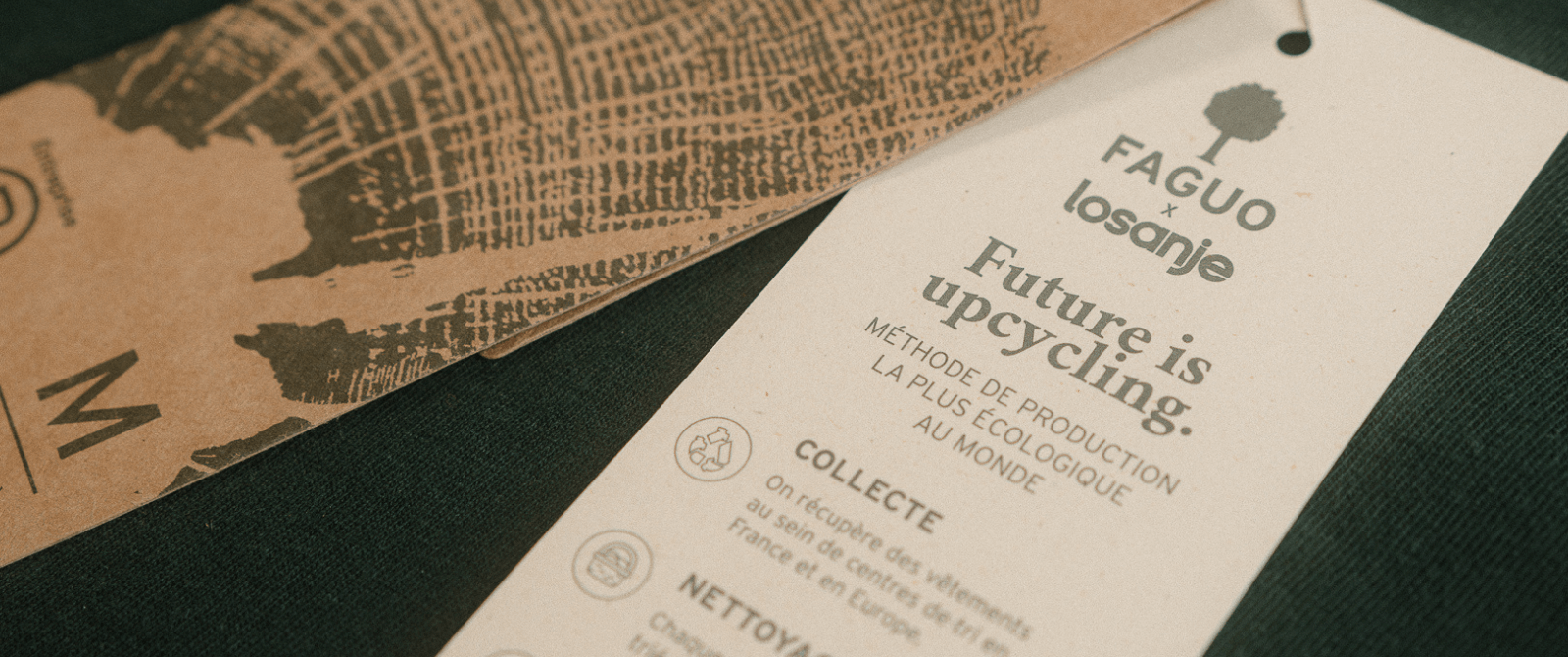
The narrative extends to the product itself: each item comes with an explanatory hangtag detailing the textile upcycling process, and sales teams have been trained to convey this message in stores.
Marketed at a price equivalent to conventional products, the capsule is a full-scale test. It allows us to assess customer acceptance, performance in the retail network, and the ability of an industrially upcycled collection to become a lasting part of existing wardrobes.
Beyond the environmental impact, the challenge is clear: to demonstrate that upcycling can work in real market conditions.
A measured environmental impact
The capsule is based exclusively on secondhand clothing.
No virgin fibers were produced, no new fabric was created, and no industrial dyes were added.
Producing from existing materials mechanically changes the environmental footprint of a collection. According to available sector comparisons, post-consumer textile upcycling can reduce CO₂ emissions by up to 90% and water use by up to 99% compared to conventional textile production*.
Conclusion: an industrial demonstration
The FAGUO x Losanje capsule provides concrete proof: upcycling is now part of a structured, reproducible industrial approach for brands.
When considered from the design stage and integrated into production lines, industrial upcycling becomes an operational lever for circular textile production.
Beyond a capsule collection, this type of project raises broader questions about the fashion industry's production model. The textile industry has historically been built on the transformation of virgin materials. Integrating post-consumer flows as a productive resource opens up a possible evolution: producing differently, without necessarily producing more material.
For brands facing the challenges of decarbonization, traceability, and regulatory change, this approach opens up a concrete path forward: integrating existing technologies into their production model is no longer a theoretical hypothesis—it is a concrete industrial option.
Would you like to explore the feasibility of a large-scale upcycled collection?
Our teams support brands in the design, sourcing, and industrial production of projects tailored to their product and schedule constraints. Contact us.
Ideas, materials,
a project? We'd love to hear from you.
At Losanje, we can help you create responsible textile products, whether you have materials to recycle or not.