The impact of textile upcycling: behind the numbers
Up to 92% less CO₂ and 99% less water compared to conventional textiles. These are the savings made possible by upcycling, a more responsible production alternative that significantly reduces the sector's impact.
your
textile products with us?
The textile industry is one of the world's biggest sources of pollution. To address these challenges, upcycling stands out as a relevant solution, drastically reducing carbon emissions and water consumption. By reusing existing materials, it bypasses the most impactful stages of production. This article summarizes the most reliable data for concretely measuring the environmental savings made possible by upcycling.
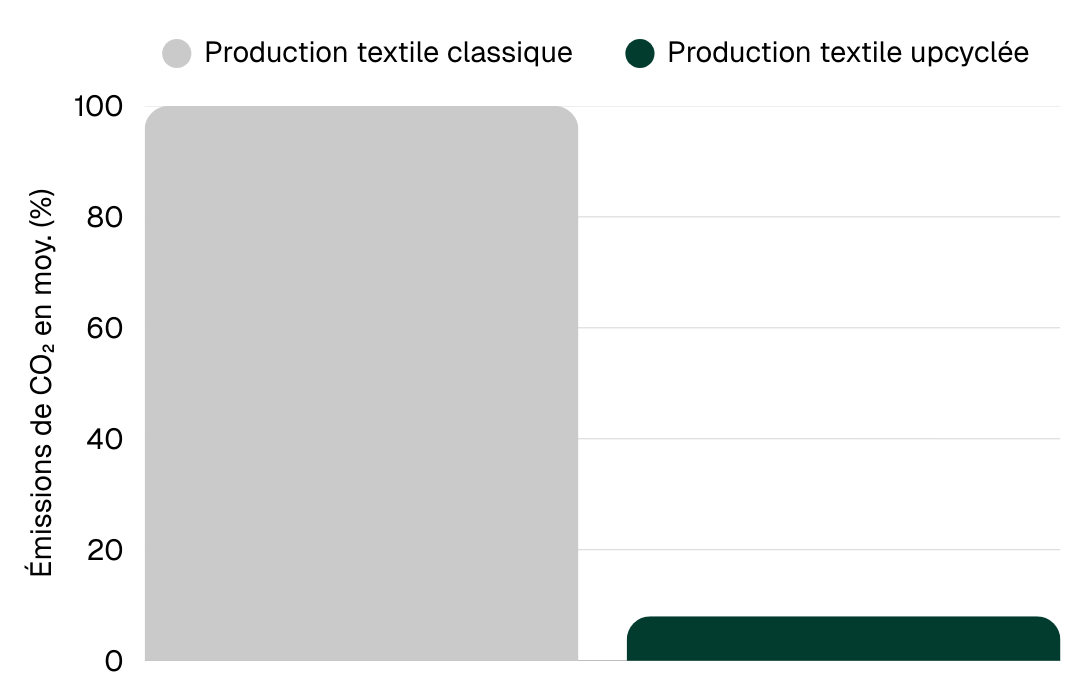
Up to 92% reduction in CO₂ emissions
According to data from McKinsey and Quantis reports,upcycling can reduce carbon emissions by up to 92% compared to conventional textile production.
Why such a difference?
The majority of CO₂ emissions from the production cycle of a garment come from the stages involved in creating the raw material. This phase includes several particularly energy-intensive sub-stages:
These steps alone account for an average of 92% of total emissions associated with the manufacture of a textile product, to which are then added those associated with clothing production and transportation.
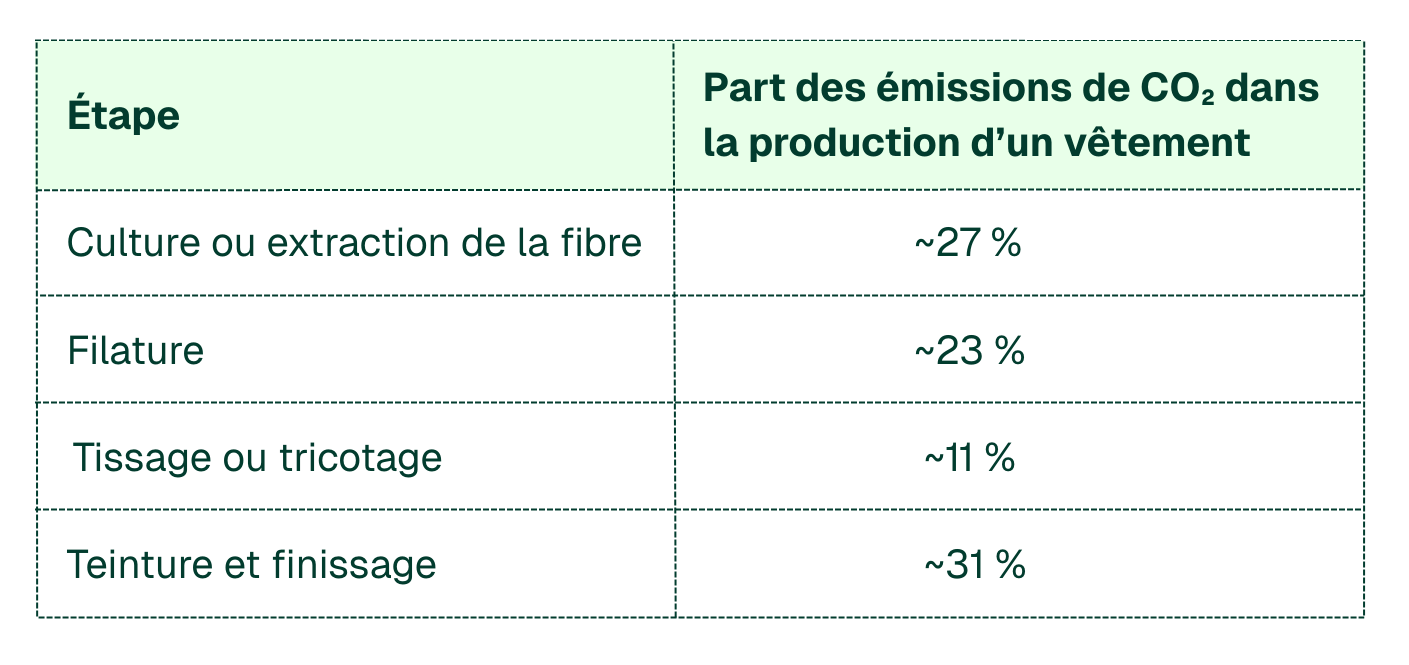
💡Why is the industrial processing of materials the stage that emits the most CO₂ in the textile production chain?
According to a study by Loom, these stages use energy-intensive machines that are often powered by electricity generated mainly by coal or gas-fired power plants, which generates significant CO₂ emissions.
The carbon impact of upcycling
Upcycling radically changes the logic of textile production. Rather than creating new raw materials, it reuses existing textiles to make new products.
In other words, it bypasses the material manufacturing stages, thereby eliminating the main source of CO₂ emissions from the textile cycle, which accounts for nearly 92% of emissions compared to the production of new textiles.
Up to 99% water savings
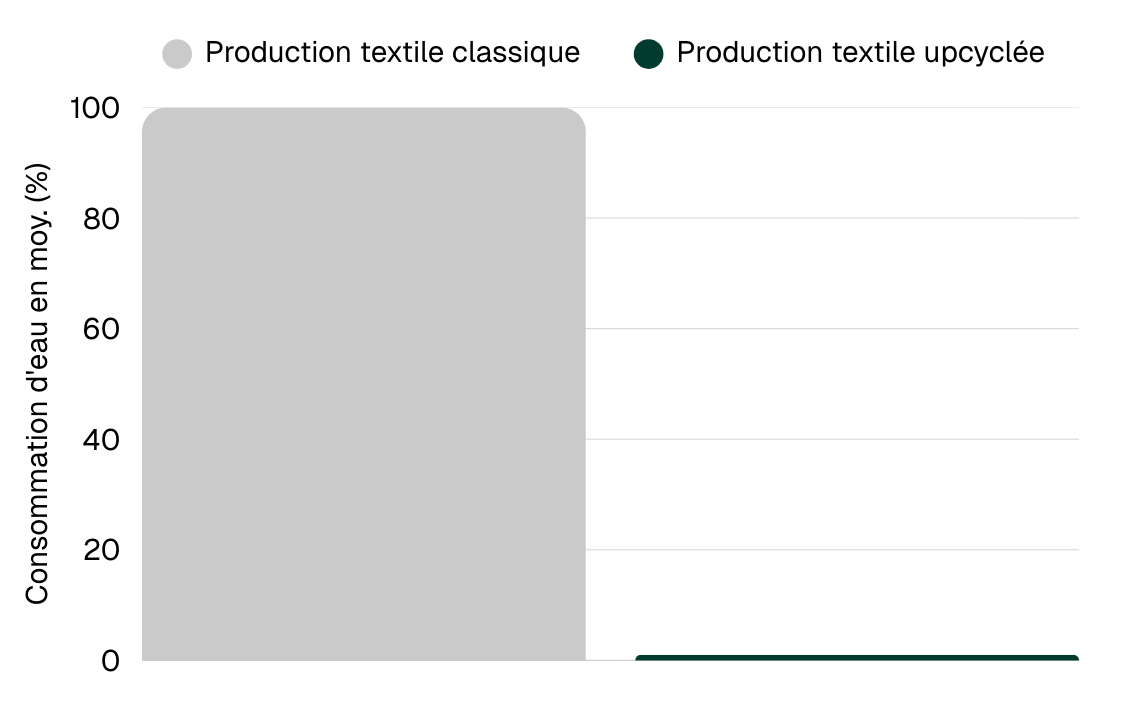
According to a study conducted by EuRIC, only 0.01% of the water needed to manufacture a new textile is used in the reuse of a garment.
Why such a difference?
The majority of the water consumption of a garment comes from the stages of creating the raw material:
- The cultivation or production of fiber (for example, 1 kilogram of cotton requires an average of 10,000 liters of water)
- The processing of materials (for example, dyeing requires between 100 and 150 liters of water per kilogram of fabric)
The impact varies depending on design choices: types of fibers used, processes and treatments applied.
The water impact of upcycling
Upcycling, like reuse, bypasses the most water-intensive stages of textile production. It involves simply cutting and assembling existing textiles, which consumes very little water.
Therefore, only a few liters of water are used during production, mainly for:
- washing and cleaning the fabric
- ironing
In other words, upcycling reduces water consumption by up to 99% compared to conventional textile production. In fact, the reduction is almost 100%, since water consumption in upcycling production is negligible.
A credible alternative for the textile industry
At Losanje, we have already recycled more than 320 tons of textiles. In concrete terms, this represents on average:
- 8.8 million kg of CO₂ avoided*, equivalent to more than 4,300 round trips between Paris and New York by plane**
- 3.2 million cubic meters of water saved***, equivalent to more than 1,200 Olympic swimming pools
This reality is confirmed by impact analysis tools. On Ecobalyse, for example, the "raw material" component of a remanufactured (and therefore upcycled) product falls to zero. This is a significant development for an industry seeking to reduce its environmental impact.
.jpg)
In a nutshell
Upcycling achieves such significant reductions in environmental impact because it fundamentally changes the production process. Fewer steps means less impact:
- No creation of raw materials (cultivation of natural fibers, extraction of oil for synthetic fibers)
- No processing stages (chemical spinning and finishing)
And it is precisely this major difference that explains its low impact in terms of water use and CO₂ emissions compared to conventional production.
By refocusing production around existing materials, upcycling offers a level of impact that few other solutions can achieve. The data speaks for itself: less energy, less CO₂, less water. It is a pragmatic, measurable, and immediately actionable approach to transforming the way we produce.
The transition of the sector will necessarily involve these models, which rethink materials as a resource rather than waste.
* Source: France Industrie
** Source: ADEME
*** Source: Losanje
Ideas, materials,
a project? We'd love to hear from you.
At Losanje, we can help you create responsible textile products, whether you have materials to recycle or not.

You might like
...